For Open House Prague, choose a few buildings whose interiors genuinely interest you and plan around their individual access conditions. The organizer lists the next festival for May 17–23, 2027, but that week-long date does not mean every building is open throughout the week. Use the new program for the actual opening days, language options and any required reservations. [1]
The festival week and building openings are different things
Open House Prague combines special access to architecture with a wider program of activities. The organizer's festival information is the responsible source for which buildings participate and how they can be visited. A general list of Prague landmarks cannot establish access to a normally private or restricted interior. [1] [2]
The distinction between the festival week and the principal building-opening days matters when booking a trip. A visitor arriving early in the week may find talks or other events rather than the full weekend opening program. Do not infer seven days of identical access from the headline date.
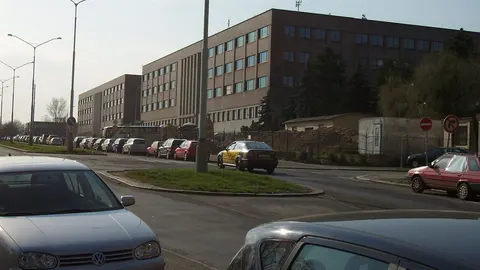
Previous editions remain useful for understanding the range of architecture, but they are not current opening promises. The 2026 program included buildings such as the former Postal Cheque Office and the Libeň brewery complex. Their appearance in an earlier edition does not guarantee the same route, hours or participation in 2027. [2]
Use the new edition's program to choose the actual visit. Keep an old article as inspiration, not as the final authority for a door you expect to be open.
Free access does not remove every booking condition
The organizer's 2026 practical information described free building access without advance registration for the main opening program, while distinguishing other activities with their own arrangements. That is a description of the published edition, not a universal rule that every future tour or event is free and unreserved. [3]
Read the individual listing for the edition you attend. A small technical space, a guided route or a separately organized event may have conditions different from a large open courtyard. The right question is not simply whether the festival is free, but how the specific visit works.
Where no reservation is required, capacity can still affect access. A building with a limited group size may involve waiting, and the final tour may begin before the site's overall closing time. Arriving at the last advertised minute is therefore not a reliable strategy for seeing the complete interior.
If an activity requires a reservation, keep the confirmation and the meeting instructions. A booking for a talk or tour should not be confused with general festival attendance. Likewise, indicating interest in an event on social media is not necessarily a reserved place.
Select buildings for the access you cannot normally get
The most valuable choices are often those that provide a different experience from an ordinary city visit. A working institution, an industrial interior or a route through normally closed rooms can reveal something that an exterior walk cannot. Read the program's explanation of the actual access before deciding which name deserves priority. [2] [3]
A famous building may offer only a limited portion of its interior, while a less familiar site may provide a more substantial guided experience. Neither is inherently the better choice. Decide whether your interest is architecture, engineering, social history or simply seeing an unusual space.
Avoid choosing solely by the size of a queue or the popularity of an image. A long wait can be worthwhile for a visit you particularly want, but it is not evidence that the building will be the most rewarding one for your interests.
For a first festival, select two priority buildings and one nearby optional stop. This is a planning recommendation rather than a fixed limit. It creates room for an unexpectedly engaging tour without making the rest of the day depend on leaving every site immediately.
Build a route around times as well as distance
Two buildings close together can still be difficult to combine if their only tours overlap. Conversely, a slightly longer journey can work well when the opening windows complement each other. Put the actual times beside the addresses before deciding the order.
Group the visit into a manageable area where possible. A route that repeatedly crosses Prague can spend more time on transport than inside the architecture. Choose one exceptional outlying visit deliberately rather than adding distant stops simply because they appear in the same program.
Allow a real meal or café break. Standing in queues and following guided routes can be tiring, especially when the day is warm or wet. A pause also gives the group time to decide whether to continue with the optional stop or spend longer at the next priority building.
Keep the final stop flexible. It should be something you can omit without feeling that the whole day failed. That makes it easier to respond sensibly when a tour lasts longer or a queue is larger than expected.
Language and accessibility belong to the individual route
An English-language festival website does not prove that every building tour is delivered in English. Use the organizer's language information and any filters attached to the current program. A route based heavily on a guide's technical explanation may be less useful when the language does not match yours. [1] [3]
Physical access also varies by building and by the special route. A site that normally has an accessible public entrance may include stairs, roof spaces or machinery areas during the festival. Ask about the actual tour rather than relying on a general description of the institution.
Describe the requirement clearly: step-free entry, lift access, a place to sit or assistance with a particular part of the route. "Suitable for everyone" is too vague to settle those questions. For children, examine the activity format and any stated age or safety conditions before treating a free opening as automatically family-friendly.
Photography permission is another separate issue. Some buildings remain working institutions even while admitting visitors. Follow the staff's instructions about images, bags and restricted areas rather than assuming that temporary access removes the normal rules.
Outside the festival, use the year-round calendar
Open House Prague also publishes a year-round events calendar. This can provide a useful alternative when your trip does not coincide with the main festival, but the events have their own dates, prices and booking conditions. Do not expect the large festival program to operate continuously. [4]
A smaller guided visit may be especially appealing when you prefer a focused experience over a busy open-building weekend. Choose it according to the subject and language rather than treating it as a lesser substitute for an event you missed.
The strongest Open House visit begins with a clear reason for entering each building. Match that interest to the correct year's program, leave room for the access conditions and accept that a few well-chosen interiors can reveal more about Prague than an exhausting attempt to collect every open door.