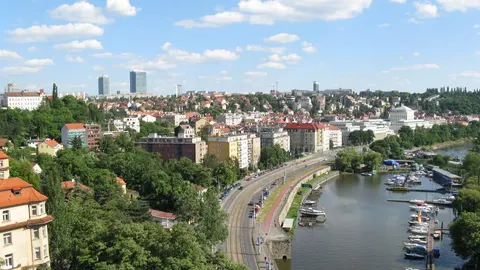
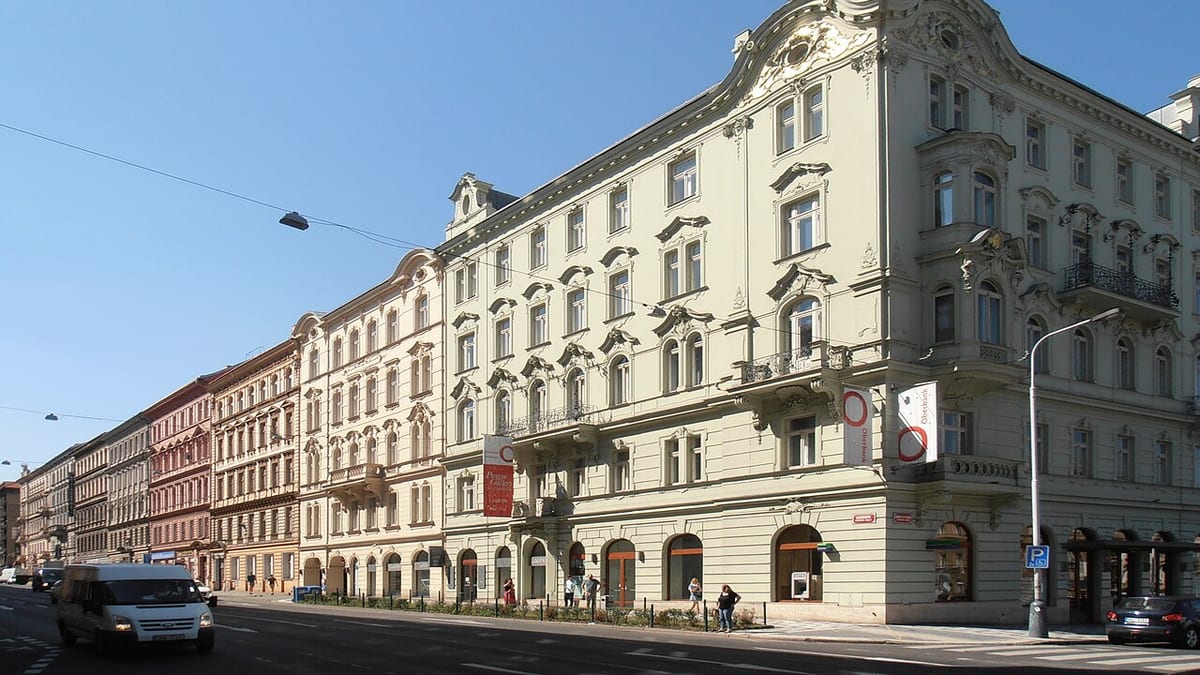
With two days in Prague, give one day to the castle side of the river and one to the Old Town and a substantial indoor visit. For a Saturday–Sunday weekend, put the castle on Saturday and the Jewish Museum on Sunday: the museum closes on Saturdays, while St. Vitus Cathedral normally opens to sightseeing only at noon on Sundays. [1] [2]
Before choosing tickets, decide what the weekend is about
This itinerary is designed for a first visit that values architecture, walking and some historical depth. It is not a challenge to enter every famous building. Choose the castle interiors as one principal paid visit, then decide whether the Jewish Museum, decorative arts or another collection deserves the second day's main indoor slot.
Stay somewhere that makes the first and last journeys simple. A slightly less central room beside a useful tram or metro route can work well, but compare the actual address with your evening plans. An attractive nightly rate loses some appeal when every return requires a complicated transfer.
Use the first evening, if you have one, for orientation and a meal near the accommodation. Do not count a late arrival as a full sightseeing day. Similarly, a Sunday afternoon flight may leave only a morning: protect the airport journey rather than pretending that a nominal two-night booking creates two complete days.
For transport, Prague's standard adult 24-hour ticket is CZK 140 in PID Lítačka or CZK 150 on paper; the 72-hour option is CZK 340 or CZK 350 respectively. Two app day tickets total CZK 280, which is less than the 72-hour ticket, but the longer ticket may cover arrival and departure journeys as well. Compare the actual validity windows. [3]
Day one: reach the castle before filling the afternoon
Begin at Prague Castle rather than climbing toward it only after several hours of lower-town walking. The castle's own arrival guide gives public-transport and pedestrian approaches, including the tram route to Pražský hrad. Choose the approach that preserves your energy for the visit; the longest uphill walk is not compulsory. [4]
Allow the morning for the castle precinct and your chosen interiors. The complex and its historic buildings do not share one opening schedule. In winter, historic interiors generally close at 16:00, while the wider complex remains accessible later. Buying a ticket late in the afternoon is therefore a different proposition from arriving for the morning opening. [1]
St. Vitus Cathedral deserves attention as a building rather than merely a photograph at its doorway. The castle circuit also includes different historical spaces, so read the current ticket description before buying an add-on that repeats what you already intend to visit. Official information centres sell circuit tickets, and the castle website identifies its online ticketing route. [5]
Keep lunch flexible enough that a worthwhile room does not have to be abandoned to meet a reservation elsewhere. My recommendation is a proper break after the castle visit, not a snack eaten while trying to navigate the next slope. For a group, agree on the afternoon's energy level at that point.
Continue through Malá Strana, then choose one river experience
After lunch, make your way through the Lesser Town toward the river. A downhill sequence is generally a more comfortable way to organize this part of the day than repeatedly climbing back to the castle. Keep the route simple and allow unplanned pauses rather than following a dense list of every church and courtyard.
Cross Charles Bridge when it fits the route. There is no need to turn the bridge into three separate appointments for morning, afternoon and sunset within a two-day visit. Seeing it once with enough time to appreciate the setting is better than repeatedly rushing back because a checklist says each light condition is essential.
For the evening, choose either a short river cruise, a concert or a restaurant you particularly want. Prague Boats' compact evening cruise lasts 50 minutes; a dinner cruise is a much larger three-hour commitment. The shorter format leaves the rest of the evening available, while the dinner boat should be treated as the main event. [6]
A shore-based walk is an equally reasonable option when the weather is poor or the boat adds little to your interests. Keep money for the experiences that matter to you rather than purchasing every standard tourist activity. The itinerary works without a cruise, a tower climb or an organized tour.
Day two: Old Town and a visit with substance
Start with the Old Town streets and square, then decide whether the Old Town Hall interior and tower are worth a ticket. Watching the Astronomical Clock from outside and visiting the town hall are different experiences. Prague City Tourism describes the building's tours and current visitor arrangements; use that information rather than assuming the clock performance itself requires admission. [7]
For a Saturday–Sunday trip, the Jewish Museum fits naturally on Sunday, subject to Jewish holidays. It is a group of sites rather than one building. Its ticket covers currently open venues, and individual and family tickets are valid for three opening days, although a short weekend may not allow you to use that full window. [2] [8]
Give the visit enough time to read and reflect. The Pinkas Synagogue memorial, the Old Jewish Cemetery and the historical exhibitions should not become a hurried sequence squeezed between shopping and lunch. Choose a realistic set of open sites and leave the remainder for another visit if attention is fading.
The museum's adult admission is currently CZK 600. That makes it a considered cultural purchase, not a negligible extra. Travelers whose stronger interest is design or decorative objects may prefer the Museum of Decorative Arts instead; its published tariff distinguishes the full main-building ticket from the permanent-exhibition-only option. [8] [9]
Do not attempt both substantial museum visits merely because they are geographically convenient. Spend the second half of the day on the collection you chose, a relaxed meal and a final walk that does not threaten your departure arrangements.
Adjust the order for the actual days and season
On a Sunday–Monday visit, the calendar becomes more important. Many museums close on Monday, and the Jewish Museum has its own Saturday and holiday pattern. Make the indoor booking first, then place the flexible outdoor walk around it. A generic "day one/day two" plan should not override an institution's opening days. [2] [10]
In winter, Prague Castle's Royal Garden, South Gardens and Stag Moat are closed to the public from November through February under the published schedule. Replace them with another part of the castle visit or an indoor stop; do not leave them on the route as though they were year-round shortcuts. [1]
In warmer months, retain more outdoor flexibility. A garden or riverside pause can be more rewarding than another interior after an already full morning. The aim is to experience the city at a pace you can absorb, not to maximize the number of scanned tickets.
For travelers with limited mobility, verify the exact approaches and buildings rather than interpreting "compact historic centre" as "step-free." Slopes, surfaces and individual entrances matter. Reduce the walking distance where necessary and use transport to connect the principal areas.
Two days are enough for a strong first impression when the plan is selective. One castle-focused day, one Old Town day and a deliberately chosen evening give the visit a clear shape. Leave the long day trip for a longer stay, and finish with the sense that you experienced Prague rather than merely moved through it.
Sources
- Prague Castle: seasonal opening schedules
- Jewish Museum: opening days and holidays
- PID: current fares
- Prague Castle: approaches and transport
- Prague Castle: official ticket information
- Prague Boats: evening cruise
- Prague City Tourism: Old Town Hall
- Jewish Museum: admission and ticket validity
- Museum of Decorative Arts: admission
- Museum of Decorative Arts: opening hours