
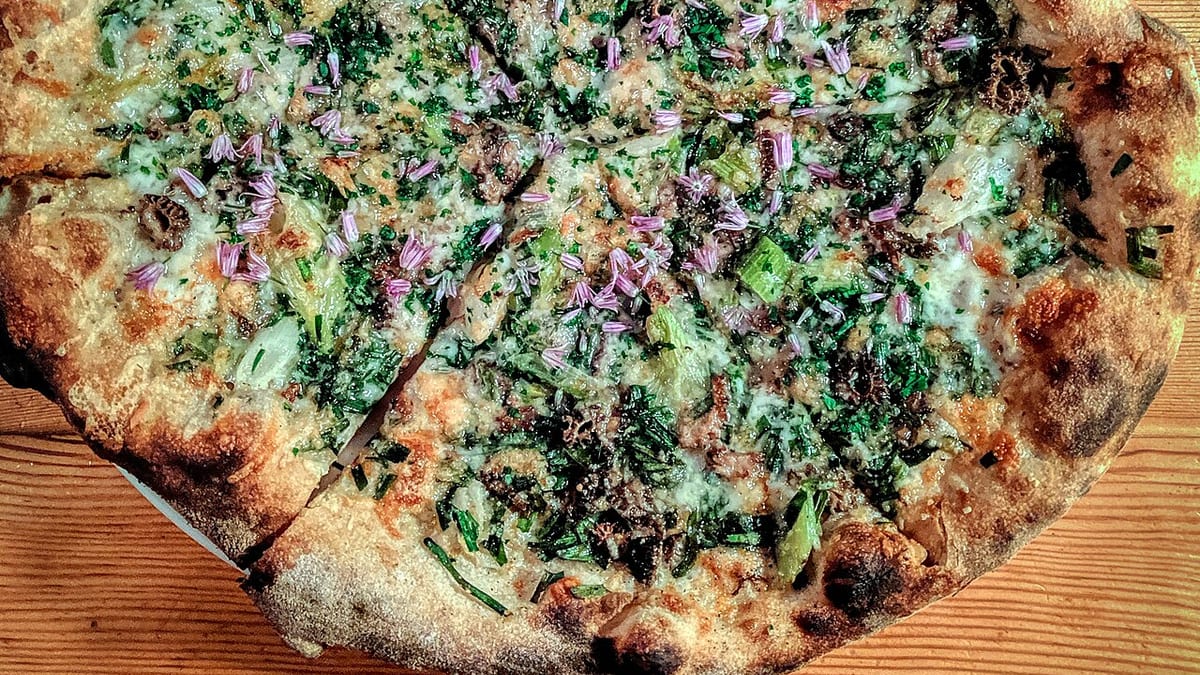
For pizza in Prague, start with Pizza Nuova for a central restaurant with both individual pizzas and tasting formats, Da Pietro for a focused contemporary pizzeria visit, or San Carlo for a branch-specific Neapolitan-style menu. Read the exact recipe and service conditions: a familiar pizza name, an unlimited offer or a restaurant's opening hours may not mean what you expect. [1][3][5]
Pizza Nuova: decide between one pizza and a longer meal
Pizza Nuova at Revoluční 1 offers a useful choice between ordering individual dishes and committing to a broader tasting format. Its à la carte menu lists Classica at CZK 318, Bufala at CZK 358 and Diavola at CZK 345. These prices provide a clear starting point for a conventional pizza meal. [1][2]
A Classica and a Diavola total CZK 663 before drinks, starters, dessert or other additions. That is a calculation for two named pizzas, not a set-menu offer. It is useful precisely because the order is simple enough to compare with your actual appetite and budget. [2]
The restaurant also advertises Napoletana and Campania tasting formats at CZK 718 and CZK 925 per person respectively. Those are different products from buying one pizza each. Their service conditions, minimum time commitment and any applicable weekday windows need to be read on the relevant menu rather than reduced to a vague promise of unlimited pizza at any hour. [1][2] [7]
Allow at least the time specified by the restaurant; the tasting format is not the right choice when you need to leave quickly for a train or performance. A larger potential quantity of food does not create value if the group lacks the time or appetite to enjoy it.
For mixed appetites, à la carte ordering may be the more comfortable option. One person can keep the meal modest while another adds a starter or dessert. Ask whether a tasting format requires the whole table to participate before assuming that individual diners can switch between systems.
Da Pietro: make the service window part of the plan
Da Pietro's Prague restaurant is at Bělehradská 61. It presents a contemporary pizza offering, so use its current menu to decide whether the style and toppings match what you want. The recommendation here is about a focused pizzeria format, not a claim that every visitor will prefer it to a more traditional or broader restaurant menu. [3][4]
Its published service information includes a kitchen break between 15:00 and 16:00 and last orders 45 minutes before closing. These details can matter more than a small price difference. A restaurant may be part of your afternoon plan yet not be serving the pizza you want at the moment you arrive. [3][4]
If you are organizing a late lunch, choose a time that clearly fits the kitchen service rather than treating the middle of the afternoon as automatically quieter and easier. For a late dinner, work backward from the last-order time, not the time at which the venue closes its doors.
Read the current menu rather than borrowing a price from an old review. Where the available information does not establish a current named price, it is better to compare the restaurant's format and obtain the actual total than to present an unsupported figure as fact.
Da Pietro makes the most sense when pizza itself is the reason for the outing. Give the location and meal their own place in the day instead of treating the pizzeria as an emergency fallback after several other plans have overrun.
San Carlo: the branch and recipe matter
San Carlo's Dittrichova 20 branch is a useful option when that part of Prague fits your route. Its menu lists Margherita at CZK 245, Diavola at CZK 285 and Bufalina at CZK 285. A Margherita and Diavola therefore total CZK 530 before drinks or other items. [5][6]
Compared with the CZK 663 Pizza Nuova example, that is a CZK 133 difference for the two stated orders. It is not a controlled comparison of identical pizzas: the named recipes, dough, portion and restaurant experience may differ. The calculation is useful for budgeting, not proof that one kitchen offers universally better value. [2][5]
A particularly important recipe detail is San Carlo's Marinara, which includes anchovies on the published menu. Diners familiar with a tomato-and-garlic marinara should not assume that the same name is fish-free everywhere. Read the ingredient line rather than ordering from memory. [5]
Branch-specific promotions need the same attention. An all-you-can-eat offer associated with one location should not be treated as a chain-wide entitlement. Confirm the restaurant, date, service window and participation rules of the particular offer before building a meal around it. [5][6]
This matters for groups who arrive expecting a fixed deal. The difference between a named branch's promotion and an ordinary menu can change the budget for every diner at the table.
A useful comparison starts with the eating experience
Before comparing prices, decide what kind of pizza meal you want. A single pizza after sightseeing, a relaxed evening with several courses and a tasting format built around trying more dishes are different outings. The cheapest starting price may not describe the format that suits your group.
Think about texture and toppings as preferences rather than universal quality rankings. Read how the restaurant describes its pizza and look at the composition of the specific order. A highly topped pizza can be appealing to one diner and distracting to another; a restrained recipe may be exactly what someone wants to compare between kitchens.
Avoid converting every menu into a simplistic price-per-gram contest. Restaurants rarely provide the information needed for a meaningful controlled comparison, and the experience includes preparation and service as well as quantity. Use published prices to set a budget, then choose the recipe and format you actually prefer.
Dietary labels need a second look
The Marinara example is a reminder that a familiar name is not an ingredient guarantee. Fish, dairy and other components may appear in sauces or toppings that are not obvious from the first word on the menu. Anyone with dietary restrictions should read the complete description and discuss requirements directly with the restaurant. [5]
For allergies, ask whether the kitchen can safely accommodate the requirement. Removing one topping does not establish that preparation will avoid cross-contact. Do not interpret a staff suggestion or a gluten-free product listing as a blanket assurance beyond what the restaurant actually confirms.
For vegetarian or vegan diners, choose a recipe that is suitable as served where possible. Extensive changes can alter both the price and the dish. A clearly described option is easier to order and assess than an improvised reconstruction of something designed around ingredients you do not eat.
Which pizzeria belongs in your itinerary?
Choose Pizza Nuova when its central location and choice of ordering formats are useful, but decide in advance whether you want individual pizzas or a longer tasting meal. Choose Da Pietro when you want to make a contemporary pizzeria visit the focus and can fit its kitchen hours. Choose San Carlo's relevant branch when its menu and location suit the day, verifying any promotion and the exact ingredients. [1][3][5][6]
These are practical selections based on published menus and service arrangements, not claims of personal tasting. The best result is an enjoyable meal at the right pace and price for your trip - not a race to collect the most famous pizza names in one weekend.