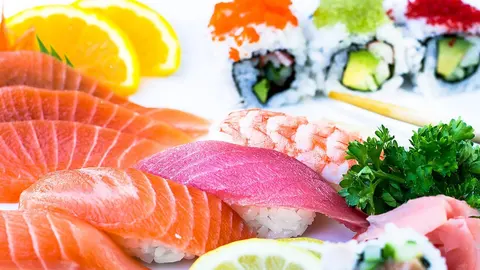
For seafood in Prague, choose Zdenek's Oyster Bar when oysters and shellfish are the main attraction, Aromi for a broader Italian restaurant meal, or Seafood Market & Grill for a counter-led fish selection. The most important comparison is how the menu prices the food: per oyster, per 100 grams and per sharing platter are not interchangeable measures. [1][2][4]
Zdenek's Oyster Bar: make the shellfish order deliberate
Zdenek's Oyster Bar is at Malá Štupartská 5 in Old Town. Its menu makes it a particularly relevant option for diners whose priority is oysters rather than simply finding a restaurant that happens to offer a fish dish. Named oyster varieties carry separate prices, so read the selection instead of assuming one universal rate. [1]
The published menu lists Gillardeau oysters at CZK 230 each and David Hervé oysters at CZK 165 each. Six of the latter total CZK 990 before any other food or drinks. Six Gillardeau oysters at the stated price total CZK 1,380. These are calculated examples for the named menu items, not fixed six-oyster packages. [1]
For a first order, ask the staff to explain the available varieties and serving format. The aim is to choose a selection you want to eat, not to equate the highest price with an objectively superior experience. Availability and personal preference matter, and this guide does not claim firsthand tasting.
Sharing platters require another check. The menu lists a Royale cold platter intended for four at CZK 6,995 and a grilled platter intended for two at CZK 3,495. Although the totals can look like a simple price comparison, the portion guidance, preparation and contents are different. Do not treat them as two sizes of an identical product. [1]
For a group with mixed preferences, settle whether everyone wants raw shellfish, cooked seafood or a combination before ordering a large platter. A sharing format loses its advantage when several people cannot or do not want to eat much of its contents.
Aromi: seafood within a complete Italian meal
Aromi is at Náměstí Míru 6 in Vinohrady, not in Old Town. Choose it when you want an Italian restaurant evening and are willing to make the journey part of the plan, rather than expecting it to be a nearby alternative after walking around Old Town Square. [2][3]
Its menu illustrates how several pricing systems can coexist. Oysters are listed at CZK 220 each, scallops at CZK 175 each, and red prawns at CZK 410 per 100 grams. A 200-gram order at that stated prawn rate would therefore be CZK 820 before any additional charges or separately ordered dishes. Confirm the actual weight and preparation of the portion offered. [2]
That confirmation is especially useful when selecting fish or shellfish by weight. Ask whether the quoted weight includes the shell or other parts not eaten, what cooking method is included and whether sauces or sides are separate. These questions are about understanding the bill, not an implication that weight-based menus are problematic.
The calamari dish listed at CZK 485 comes with anchovy mayonnaise. It is a concrete reminder that the principal ingredient does not identify every relevant component: a dish described mainly by squid can also contain fish in its sauce. Anyone managing an allergy or dietary restriction should discuss the whole preparation directly with the restaurant. [2]
Aromi is the more suitable choice on this shortlist when the occasion includes several courses and diners with interests beyond oysters. Look at the entire menu, not only the seafood section, before deciding whether it fits the group.
Seafood Market & Grill: decide at the counter
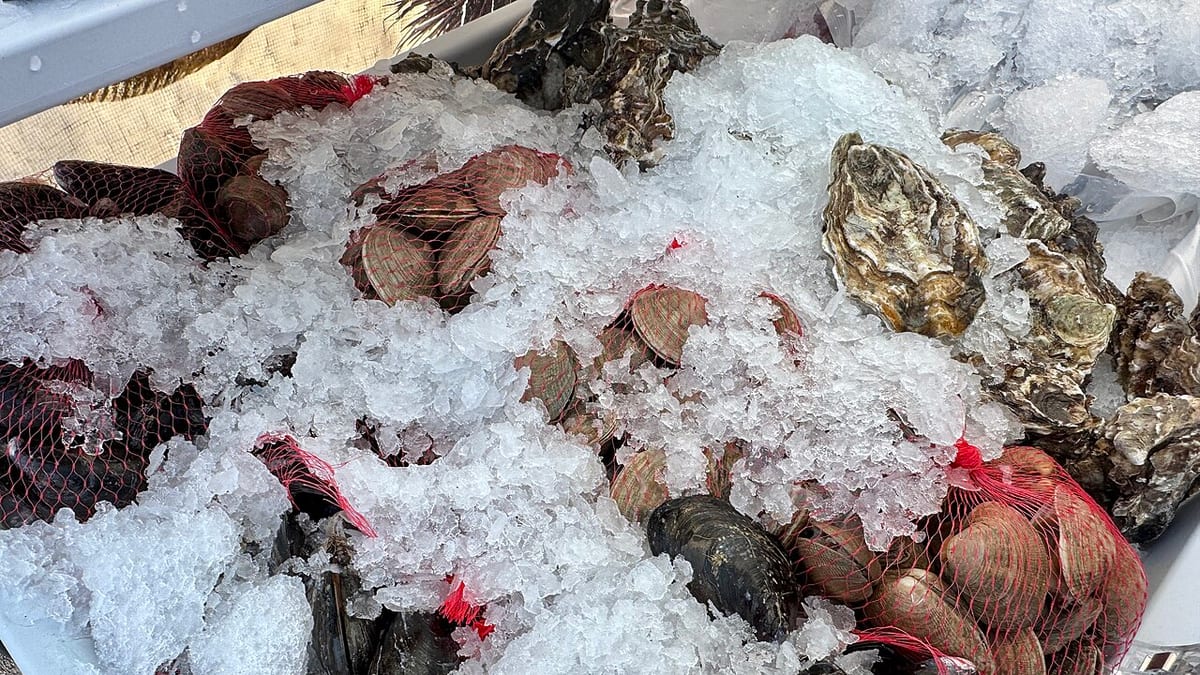
Seafood Market & Grill at Štěpánská 31 offers a different proposition: choosing seafood in a market-style setting rather than beginning with a conventional restaurant sequence. Its counter and grill format makes the displayed product and the explanation of preparation central to the purchase. [4][5]
For a first visit, ask how the selected item is priced, how much the proposed portion weighs and what the final plate includes. A rate per 100 grams is only the beginning of the calculation. The useful figure is the cost of the portion you intend to eat, prepared in the way you want, with any desired accompaniment.
This style can suit diners who prefer to see the options before deciding. It can be less convenient for someone who wants the entire meal cost settled from a fixed set menu before arrival. Neither preference is inherently better; they simply call for different restaurants.
Do not assume that every item displayed in a seafood market is intended to be eaten in the same way or served immediately. Explain whether you want a meal on site and let the staff clarify the suitable choices, cooking options and expected sequence of service.
Translate the menu into a meal budget
The safest comparison begins with an actual proposed order. For an oyster-focused evening, count the oysters, then add the dishes and drinks needed to make the meal you want. For a fish-counter meal, obtain the total for the selected weight and preparation. For a sharing platter, confirm the intended number of diners and whether you need additional food.
A low unit price is not the same as a low final bill. CZK 410 per 100 grams may initially look cheaper than a fixed-price main dish, but a larger chosen portion can reverse that impression. Conversely, a substantial platter may represent a reasonable shared order even though its headline total is high. The portion and contents determine the meaning of the price. [1][2]
Keep currency explicit. These menus use Czech koruna, abbreviated CZK. A mental conversion into another currency may help your own budgeting, but avoid comparing one restaurant's koruna price with another website's converted figure as though both were quoted on the same basis.
Also distinguish an illustrative calculation from a guaranteed bill. The examples here use published item prices and stated assumptions. Drinks, bread, sides, additional courses and any disclosed charges can change the final total.
Raw and cooked are different preferences, not quality rankings
Some diners want raw oysters; others prefer grilled fish or cooked shellfish. Choose the restaurant and order around that preference rather than assuming the most elaborate raw platter is the essential seafood experience.
For food allergies, communicate directly with the restaurant before ordering. An ingredient description is useful, but it cannot establish how the kitchen manages cross-contact. Where a restaurant cannot accommodate a requirement, choosing another meal or venue is more sensible than trying to negotiate an uncertain substitution at the table.
Freshness claims, sourcing descriptions and availability should be discussed for the actual products being offered. This guide does not infer a universal supply chain or promise a particular catch simply because a restaurant specializes in seafood. The menu is a starting point for the decision, not proof of what will be available on every visit.
Which one fits your evening?
Choose Zdenek's when the occasion is specifically about oysters or a shellfish platter and Old Town is convenient. Choose Aromi when a broader Italian meal in Vinohrady is the better match. Choose Seafood Market & Grill when you value selecting a product and discussing its preparation at the counter. [1][2][4]
The strongest booking is the one that settles the important questions before appetite and a busy dining room make them harder to ask: what will you eat, how much is the portion, what does the price include and does the format suit everyone at the table?